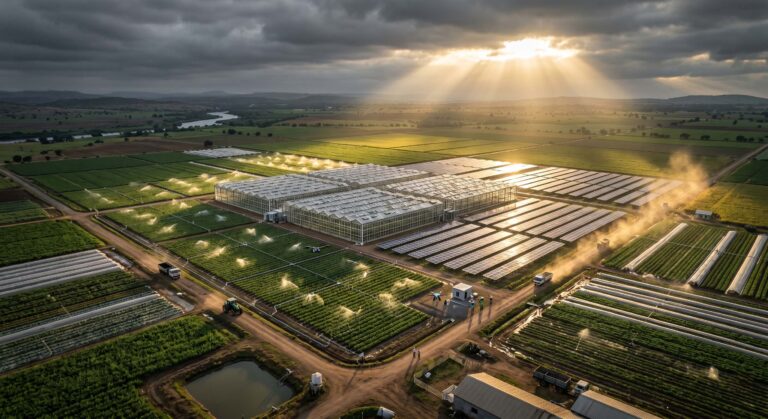

With the global agricultural sector demanding higher volumes of specialized fertilizers and crop protection chemicals, it comes as no surprise that industrial developers are actively planning large-scale chemical manufacturing facilities. Regrettably, treating preliminary project analysis as a mere administrative formality is frequently the first hurdle to successful plant commissioning. In early 2023, our engineering and financial audits across newly established chemical corridors revealed that bypassing comprehensive techno-economic feasibility studies leads to an average 30 percent overrun in initial Capital Expenditure (CAPEX). In certain instances, mismatched technology selection and inaccurate operational cost projections resulted in plants becoming economically unviable within their first year of operation. Finding a balance between aggressive project timelines and meticulous pre-construction modeling is crucial to navigate the complexities of today’s heavy industrial landscape.
Bridging the Gap: Where Engineering Meets Economics
Over the past few years, project developers have faced an arduous journey due to the rapid shifts in raw material pricing and the rising costs associated with environmental compliance technologies. In an era of strict industrial regulation, corporate boards have been compelled to demand absolute clarity before sanctioning mega-projects. In fact, forward-thinking industrial conglomerates are modifying their entire planning behavior by integrating deeply technical engineering assessments with dynamic financial forecasting—evaluating everything from thermodynamic efficiencies to global supply chain volatility. Simultaneously, the cost of rectifying foundational design flaws post-construction has experienced an astronomical upward trajectory, making a robust techno-economic blueprint not just a planning tool, but a commercial necessity for survival.

The Capital Allocation Strategy: Engineering for Profitability
During the initial planning phases, project sponsors often respond to budget constraints by implementing uniform cost-cutting measures across their preliminary engineering design (FEED) studies, such as heavily restricting the budget for third-party feasibility analysis. Many believe they can manage project risks by relying on generic industry benchmarks rather than site-specific data. While they may achieve a minor saving in pre-development costs, they are directly exposing their billion-rupee assets to catastrophic operational inefficiencies. However, there is a viable path forward. Instead of solely focusing on indiscriminate cuts to planning budgets, companies can adopt an investor mindset and take a more nuanced approach to their project foundation. This involves identifying specific process bottlenecks through rigorous simulation software and allocating targeted resources to pilot-plant testing that offers greater potential for long-term return on investment (ROI). By eliminating theoretical assumptions and backing every engineering decision with hard economic data, successful project developers can potentially optimize their overall OPEX by 15 to 20 percent, reinvesting this capital into advanced safety automation.
"While it’s tempting to rush project commissioning to meet market demand, we believe that developers who double down on rigorous techno-economic feasibility will not only avoid massive capital drains but will emerge as the most profitable operators in the chemical sector."
Blueprint for Success: A Call to Action for Project Developers
Despite the ongoing complexities in industrial supply chains, the current market presents a pivotal opportunity for forward-thinking developers to unlock substantial value for their infrastructure portfolios, leveraging data-backed feasibility to drive growth and establish a highly profitable manufacturing agenda for the future. In times of capital transition, it may be tempting for legacy industrial groups to retract and adopt a highly conservative, standard-design approach. However, we firmly believe that organizations that choose to adopt foundational techno-economic modeling will navigate construction hurdles more swiftly and emerge from these developmental challenges in a position of immense financial strength. Now is the defining moment for agro-chemical leaders to pivot their focus intensely toward calculated, fail-proof execution.