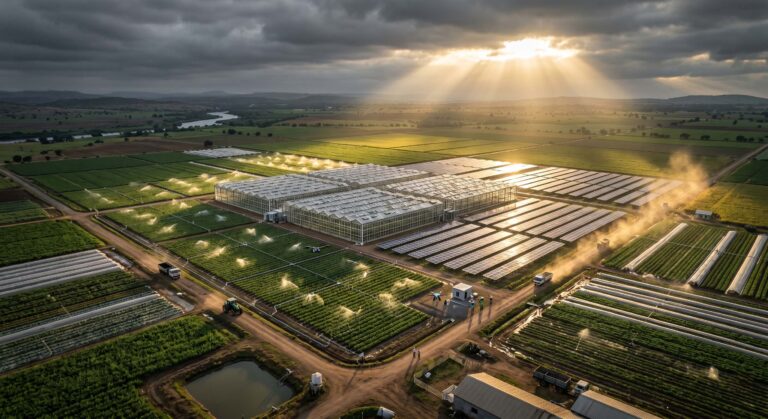

With the global population expanding and food security becoming a paramount concern, it comes as no surprise that institutional investors are aggressively channeling capital into the agribusiness sector. Regrettably, relying solely on legacy land assets and traditional yield metrics is frequently the first hurdle to securing modern venture funding. In early 2022, our analysis of agricultural investment portfolios revealed that an inability to demonstrate data-driven scalability leads to an average 40 percent rejection rate during early-stage due diligence. In certain instances, promising agribusinesses failed to secure capital simply because they lacked transparent ESG (Environmental, Social, and Governance) reporting. Finding a balance between traditional farming heritage and modern, institutional-grade corporate structuring is crucial to navigate the complexities of today’s competitive venture capital landscape.
Decoding Institutional Due Diligence: Beyond the Balance Sheet
Over the past few years, agribusiness founders have faced an arduous journey due to the rapid shifts in investor expectations and the rising importance of climate-resilient technologies. In an era of impact investing, global funds have been compelled to prioritize sustainability alongside profitability. In fact, forward-thinking agricultural enterprises are modifying their entire corporate behavior by integrating comprehensive traceability software, formalizing middle-management structures, and adopting strict soil and water conservation protocols. Simultaneously, the competition for tier-one capital has experienced a sharp upward trajectory, making institutional-grade data transparency not just an administrative bonus, but a commercial necessity for securing major funding rounds.

The Pitch-Ready Mindset: Engineering Investable Assets
During the fundraising phase, agricultural leaders often respond to investor pushback by implementing superficial updates to their pitch decks, such as indiscriminately adding buzzwords like “AgriTech” or “Green” to their presentations. Many believe they can manage investor concerns by simply marketing their traditional operations more aggressively. While they may secure initial meetings, they are directly harming their long-term credibility when deep financial audits reveal a lack of underlying operational tech. However, there is a viable path forward. Instead of solely focusing on cosmetic marketing, agribusinesses can adopt an investor mindset and take a more nuanced approach to their actual infrastructure. This involves identifying specific operational inefficiencies through third-party audits and allocating targeted resources to digital farm management systems that offer clear, predictable paths to long-term return on investment (ROI). By eliminating opaque accounting and manual data tracking, successful agricultural setups can potentially increase their valuation multiples by 15 to 25 percent, leveraging this data to negotiate highly favorable equity terms.
"While it’s tempting to rely on the sheer size of landholdings to attract funding, we believe that agribusinesses that double down on digital transparency and rigorous ESG compliance will not only secure premium venture capital but will emerge as elite industry benchmarks."
Securing the Cap Table: A Call to Action for Agri-Founders
Despite the ongoing complexities in global financial markets, the current investment climate presents a pivotal opportunity for forward-thinking agribusiness owners to unlock substantial capital, leveraging institutional readiness to drive explosive growth and establish a clear expansion agenda for the future. In times of economic transition, it may be tempting for traditional farm owners to retract and rely exclusively on slow, organic, debt-free growth. However, we firmly believe that organizations that choose to adopt foundational venture-ready corporate structures will capture market share more swiftly and emerge from these fundraising challenges in a position of immense financial strength. Now is the defining moment for agricultural leaders to pivot their focus intensely toward institutional-grade scalability.